The choice between a tripod turnstile and a speed gate depends on your company's specific access control needs. Tripod turnstiles are ideal for situations where a controlled and secure flow of people is required, while speed gates are more suitable for high-traffic environments where quick access is desired.
Features of the Tripod Turnstile
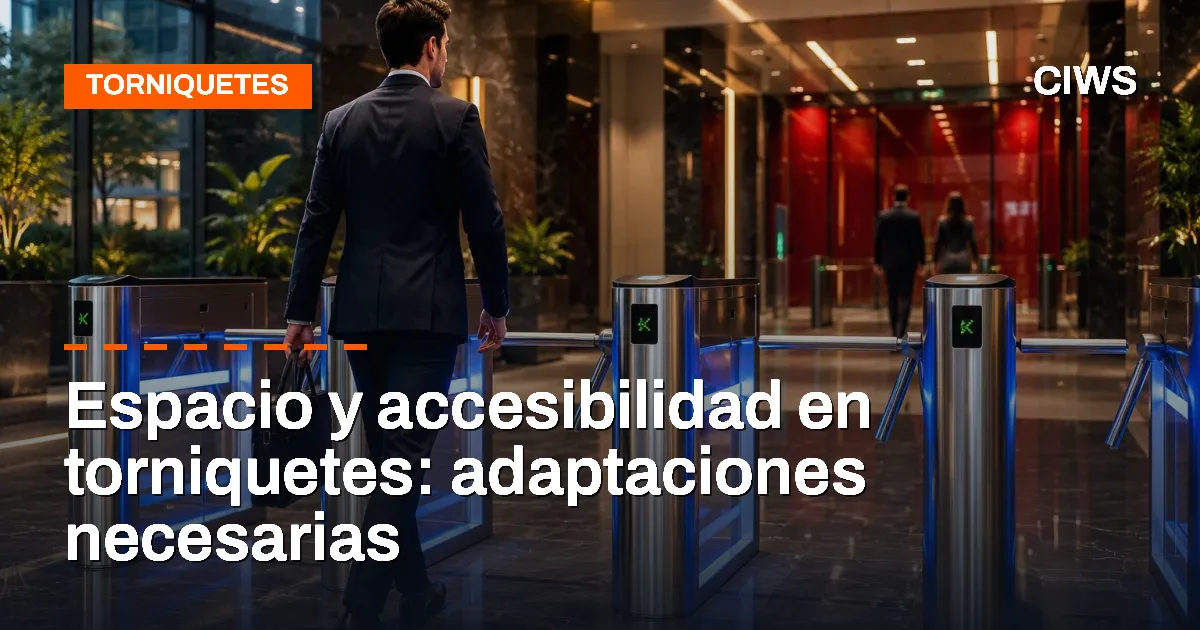
A tripod turnstile is an access control mechanism that uses three rotating arms to allow one person to pass at a time. This type of turnstile is robust and reliable, capable of handling up to 60 people per minute. Tripod turnstiles are an economical and efficient option for controlling access in areas where security is a priority, such as gyms, factories, and government buildings.
Advantages of the Speed Gate
On the other hand, speed gates use motorized sliding doors to allow faster and contactless access, ideal for high-traffic areas like airports, metro stations, and corporate offices. These devices can handle between 30 and 45 people per minute, depending on usage conditions and the specific model.
Cost and Maintenance Comparison
Tripod turnstiles require less maintenance due to their simple mechanical design, resulting in lower long-term operational costs. In contrast, speed gates, although initially more expensive, offer a return on investment in situations where fast and continuous flow is crucial, compensating with reduced queues and wait times.
Which to Choose for Your Business?
The right choice between a tripod turnstile and a speed gate will depend on several factors such as the flow of people, the required level of security, and the available budget. If you need to control access in a facility with moderate foot traffic and a focus on security, a tripod turnstile is the ideal option. However, if speed and convenience are priorities, especially in high-density traffic areas, a speed gate will be more suitable.
Considerations Before Making a Decision
- Determine the average flow of people in your facility.
- Evaluate the level of security you wish to implement.
- Consider the space available for equipment installation.
- Analyze the budget for initial investment and long-term maintenance.
By considering these factors, you can make an informed decision that aligns with your company's specific needs and ensures effective access control.
Frequently Asked Questions
What type of business should opt for a tripod turnstile?
Businesses that need to control access with a focus on security and where foot traffic is not very high, such as factories or gyms.
When is it more appropriate to use a speed gate?
It is ideal in places with high traffic density where efficiency and speed of entry are desired, such as corporate offices and airports.
Are speed gates more expensive than tripod turnstiles?
Yes, generally speed gates have a higher initial cost but offer benefits in speed and continuous flow that can justify the investment.
See also: Turnstiles and Access Gates.