
SANTI Online · CIWS Advisor
Prefer to talk on WhatsApp? Message us
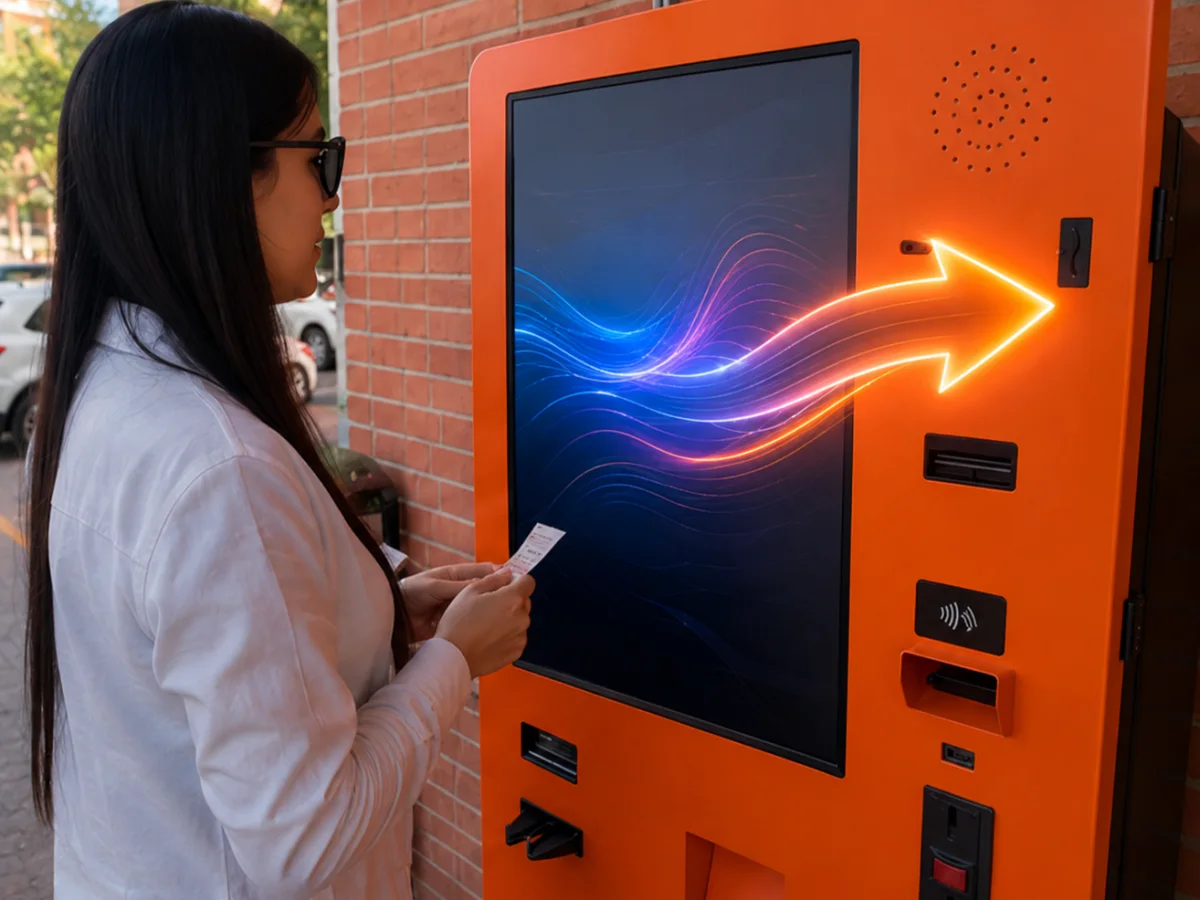
Self-service terminal with a 32-inch touchscreen, customizable with the parking lot's brand. Accepts cash with change, debit and credit card, and digital payment, issues DIAN e-invoicing, and integrates natively with the CIWS platform. Operates continuously, without an operator.
The charge no longer depends on a schedule or a person: the station invoices at any time and each transaction is supported.
Nights, Sundays, and holidays without paying a shift. The parking lot charges the same at three in the morning.
Each transaction saves its video with what was invoiced, received, and returned. The difference is seen, not debated.
DIAN e-invoicing or equivalent document from the same transaction.
The customer pays while walking to the car, not at the exit with the barrier down.
Four steps on the touchscreen, with voice guidance at each one. The customer pays before reaching the lane, keeping the exit clear.
Or scan the QR. If the parking lot has license plate recognition, enter the plate number.
The screen shows the duration of stay and the amount to pay.
Cash with change, debit or credit card, or digital payment, as enabled.
The barrier verifies the payment and opens the lane.
The station guides each step on the screen and aloud. The customer pays standing, in the lobby or in the lane, before reaching the vehicle.
The parking lot decides which to enable. Each transaction records the payment method used, so reconciliation distinguishes cash from card without guessing.
Bills and coins. Receives, validates, counts, and returns change. Cash levels are monitored from the software.
With integrated card reader. Each payment records the approval number, card brand, and RRN with the transaction.
Via gateway, for those who no longer carry cash or want to use a card.
DIAN e-invoicing or equivalent document issued from the same transaction. Printed right there.
Invoiced, received, and returned, along with the video of the payment moment. A claim is resolved by consulting the evidence, not reconstructing the shift.
The transaction saves the video of the payment moment along with the figures: total invoiced, received, returned, and any shortage. Accessible from the transaction details.

A machine that receives money from strangers at three in the morning is not built with desktop parts. These are the components, with name and reference.
Bill and coin RECYCLERS, not just acceptors. The difference is money: the bill that comes in is stored to give as change instead of falling into a box that no one empties until the next day. That's why the machine runs out of change much less often, and that's why it needs to be refilled less frequently.

The software continuously monitors the station's devices—bill recycler, coin recycler, card reader, and printer—and acts on them when it detects a fault. This allows the machine to operate without anyone nearby.
The system constantly checks the bill and coin recyclers. If one jams or loses communication, it detects, restarts, and brings it back online without anyone intervening.
If the bill recycler runs out of change, the screen stops offering cash instead of accepting money and then being unable to give change. The customer pays with a card and continues.
The machine guides the customer through each step. For those who have never used one of these kiosks—which are many—it makes the difference between paying and going back to find the attendant.
The pay station is the collection point. These are the devices it works with on the same platform.

They issue the ticket or QR code that is later paid at the station.
See this solution →
They validate that the transaction is paid before opening the lane.
See this solution →
Identifies the vehicle without a ticket: the customer pays by entering their license plate.
See this solution →With these two figures, we tell you how long it takes for the kiosk to pay for itself in your parking lot. If it doesn't pay for itself, we'll tell you that too.