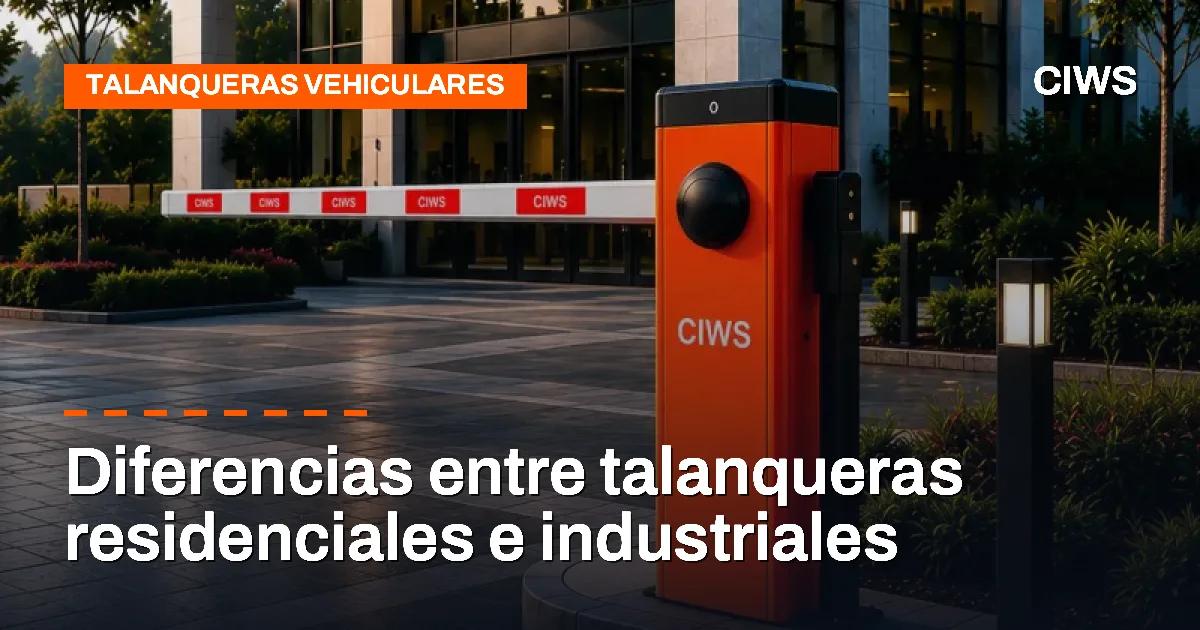
The main difference between a residential boom barrier and an industrial boom barrier lies in their usage capacity and durability. Boom barriers for residential use are designed for moderate use, typically in residential complexes or buildings that need to control the access of residents' and visitors' vehicles. In contrast, industrial boom barriers are built to withstand heavy use in settings such as factories, loading and unloading areas, and any facility with heavy vehicle traffic.
Features of Residential Boom Barriers
Residential boom barriers usually have an arm length ranging from 2.5 to 4 meters, sufficient to cover an entry or exit lane in a complex. They are designed to operate efficiently with frequent but not constant use, handling 100 to 200 cycles daily depending on the model. Additionally, they often integrate with access systems like remote controls, RFID cards, and, in some cases, license plate recognition.
Features of Industrial Boom Barriers
On the other hand, industrial boom barriers feature arms that can extend up to 6 meters or more, adapting to wider and customized accesses. They are designed to withstand intensive use, exceeding 500 cycles daily. This makes them ideal for areas where vehicle flow is constant and heavy, such as industrial or commercial zones. Their construction is more robust, with materials that endure daily wear and adverse weather conditions.
Materials and Durability
Residential boom barriers are typically constructed with lightweight materials like aluminum or coated steel to prevent corrosion. In contrast, industrial barriers use reinforced steel and high-strength components, providing a longer lifespan and less maintenance, even in unfavorable conditions.
Integration and Automation
Both types of boom barriers can integrate with advanced access control systems. However, industrial barriers often include additional features such as presence sensors or extra safety barriers to prevent accidents in high-traffic areas. Automation can also be more complex in industrial environments, with integration into traffic and logistics management systems.
What to Consider Before Choosing?
- Traffic Volume: Evaluate how many vehicles pass daily. If it's more than 200, an industrial boom barrier is more suitable.
- Available Space: Check if the space allows for the installation of a longer boom barrier or if a more compact option is needed.
- Weather Conditions: Consider if the equipment will be exposed to extreme conditions that may require more resistant materials.
When is an Industrial Boom Barrier Not Suitable?
If the installation is in a small complex with little vehicle traffic, an industrial boom barrier may be an unnecessary expense. Also, if space is limited, it may not be the best option due to its dimensions and installation requirements.
For an informed decision, evaluate the specific characteristics of your property and the expected vehicle flow to select the boom barrier that best suits your needs.
Frequently Asked Questions
What is the lifespan of an industrial boom barrier?
The lifespan of an industrial boom barrier can exceed 10 years, depending on maintenance and usage conditions.
Can I use a residential boom barrier in an industrial setting?
You can, but it is not recommended due to premature wear from the intensive use required in industrial settings.
What access systems can integrate with a residential boom barrier?
Residential boom barriers can integrate with remote controls, RFID cards, and license plate recognition systems.