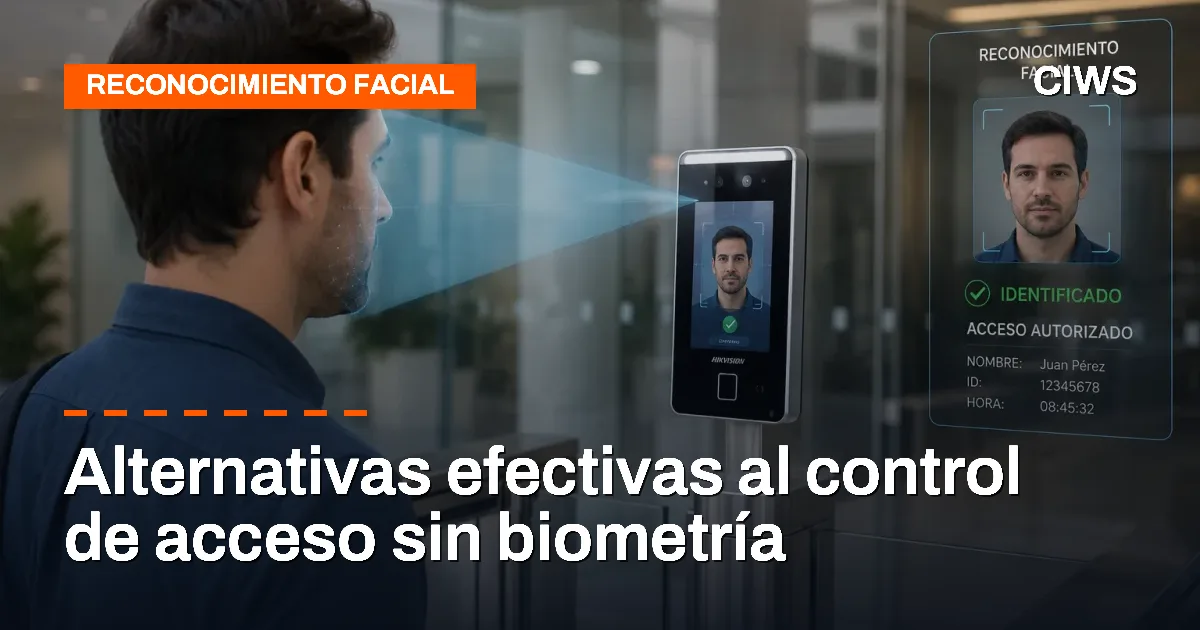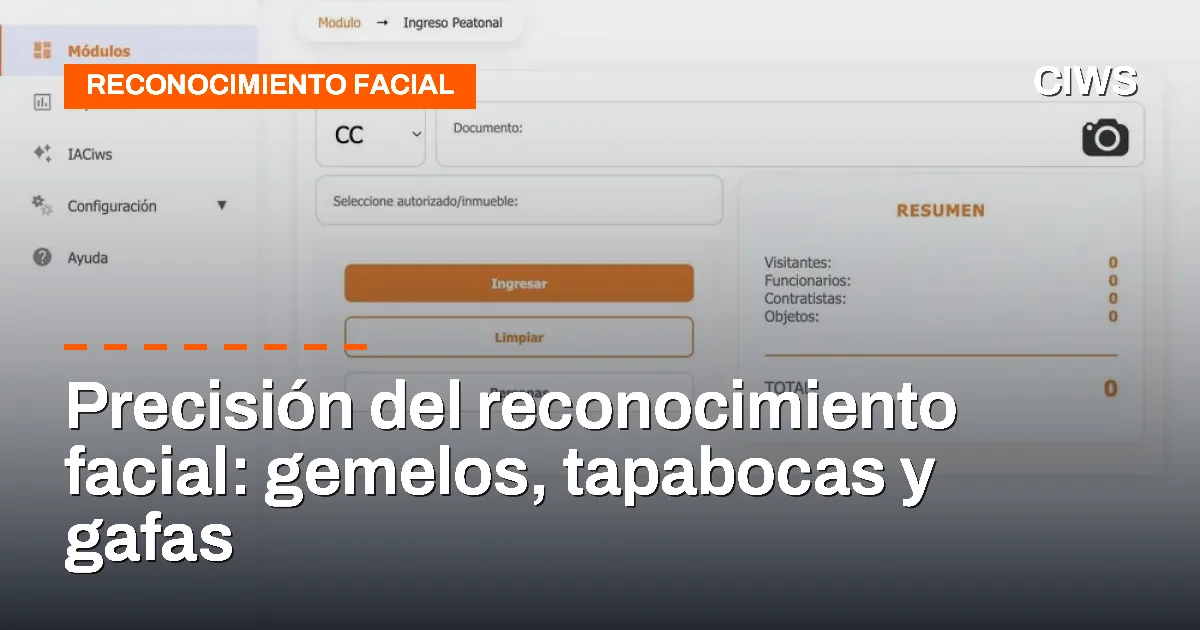
Facial recognition accuracy can reach 97% under ideal conditions; however, factors such as wearing masks, glasses, and the presence of twins can significantly reduce this effectiveness. For facial biometric access contexts, it is crucial to understand how these variables impact system performance.
Impact of Twins on Facial Recognition
Facial recognition systems can struggle to identify twins due to their nearly identical facial features. In controlled tests, the error rate can increase by up to 3% in these cases. Therefore, in facilities where twins are expected, it is recommended to complement access control with additional methods, such as credentials or QR codes.
Effect of Masks on Accuracy
Wearing masks, which cover approximately 50% of the face, can decrease facial recognition accuracy by 15%. More advanced systems are optimized to read uncovered features, but not all offer this capability. In environments where mask use is constant, it is advisable to evaluate systems that integrate iris recognition or emphasize visible features.
How Glasses Affect Facial Recognition
Glasses, especially those with thick frames or tinted lenses, can interfere with facial identification. Accuracy can drop between 5% and 10% depending on the glasses' design. To minimize this impact, it is suggested to use algorithms that prioritize the analysis of bone structure and other unobstructed features.
Considerations for Implementing Facial Biometric Access
Before deciding to implement a facial access control system, consider the diversity of users and usage conditions. Ask yourself: Does the environment require frequent use of masks or glasses? Is there a significant presence of twins? Will the system be used in low-light conditions? These factors will determine the need for complementary systems to ensure accurate identification.
Conclusion
Facial recognition systems offer a high level of security, but their effectiveness can be compromised by factors such as twins, masks, and glasses. Evaluating these variables is key to ensuring the technology adapts to your specific needs and maintains its performance.
Frequently Asked Questions
How do twins affect facial recognition?
Twins can decrease accuracy due to their facial similarities, increasing the error rate by up to 3% in some systems. It is advisable to complement with credentials or QR codes.
How effective is facial recognition with masks?
Wearing masks can reduce facial recognition accuracy by approximately 15%, especially in systems not optimized to detect uncovered features.
Do glasses interfere with facial recognition?
Yes, especially those with thick frames or tinted lenses, which can decrease accuracy by 5% to 10%. It is recommended to use algorithms that prioritize unobstructed features.
What should I consider before implementing a facial recognition system?
Consider the diversity of users, usage conditions, frequency of mask or glasses use, presence of twins, and lighting conditions. This helps determine the need for complementary systems.