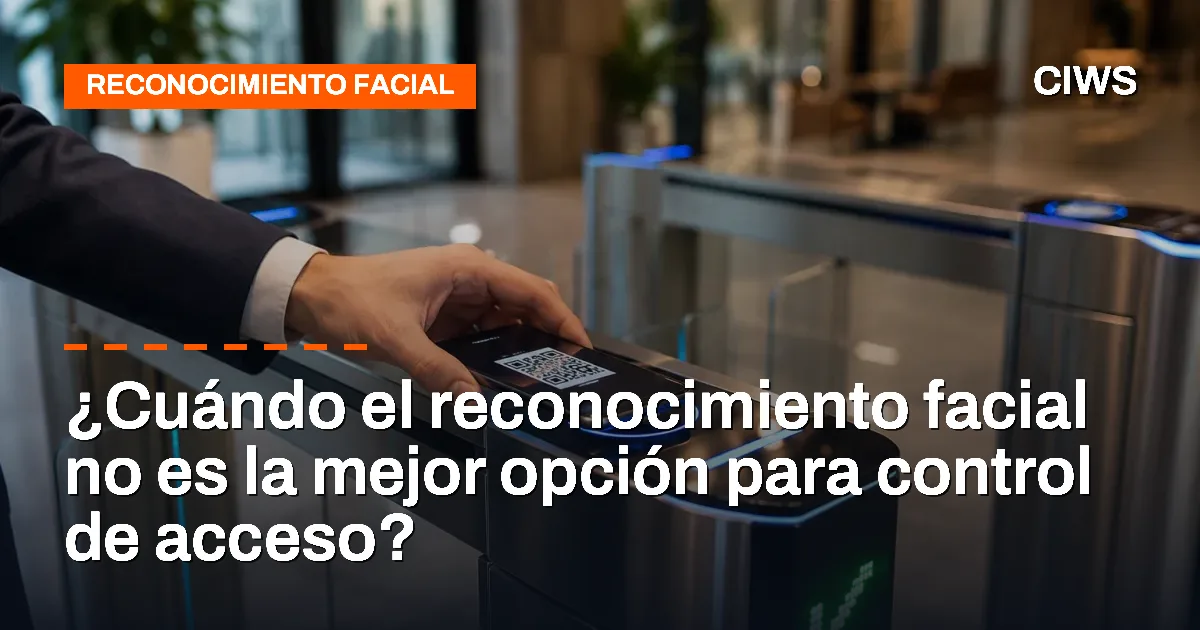
Facial recognition is not the best option for access control in situations where lighting conditions are poor, where there is high foot traffic, or when there are significant concerns about data privacy. These factors can affect the effectiveness and acceptance of this technology, making other alternatives more suitable.
Lighting Limitations in Facial Recognition
Facial biometrics in businesses and other environments require adequate lighting conditions to function effectively. In low-light areas, such as basements or underground parking lots, the recognition rate can significantly decrease, affecting the operability of facial access control. In these cases, it is essential to consider installing complementary lighting systems or exploring other access technologies.
Impact of High Traffic on Facial Biometrics
In environments with high foot traffic, such as shopping centers or large events, facial access control might not be the most efficient option. The need to briefly stop for recognition can create queues and delays, negatively impacting user experience. Alternatives like proximity cards or QR codes could offer smoother access in these circumstances.
Privacy and Data Protection Concerns
The use of facial biometrics in businesses must comply with Colombia's Data Protection Law 1581, which requires obtaining explicit consent from each registered individual. In environments where privacy is a priority, such as clinics and universities, it may be preferable to opt for systems that do not require storing biometric data, like one-time-use QR codes.
Viable Alternatives to Facial Recognition
When facial recognition is not the ideal option, administrators have several alternatives available:
- Proximity Cards: They offer a quick and simple solution for access control, without lighting issues.
- QR Codes: Ideal for visitor control, allowing secure access without the need for biometric data.
- Credential Access: Useful for places where more rigorous and personalized access control is required.
Considerations Before Choosing an Access Control System
Before deciding on an access control system, administrators should evaluate the physical environment, traffic volume, and applicable privacy regulations. In cases where conditions are not ideal for facial recognition, exploring other technologies can offer a more suitable and efficient solution.
The next step is to analyze the specifications of each technology, considering the particular requirements of your property or installation, to ensure a successful implementation that meets your needs.
Frequently Asked Questions
Does facial recognition work in low lighting?
No, facial recognition can fail in low-light conditions, as it relies on good visibility to identify facial features.
Is it safe to use facial recognition in terms of privacy?
It depends on compliance with local laws like Law 1581 in Colombia, which requires consent to process biometric data.
What is an alternative to facial recognition for high traffic?
Proximity cards and QR codes are options that allow for faster and more efficient flow in high-traffic environments.