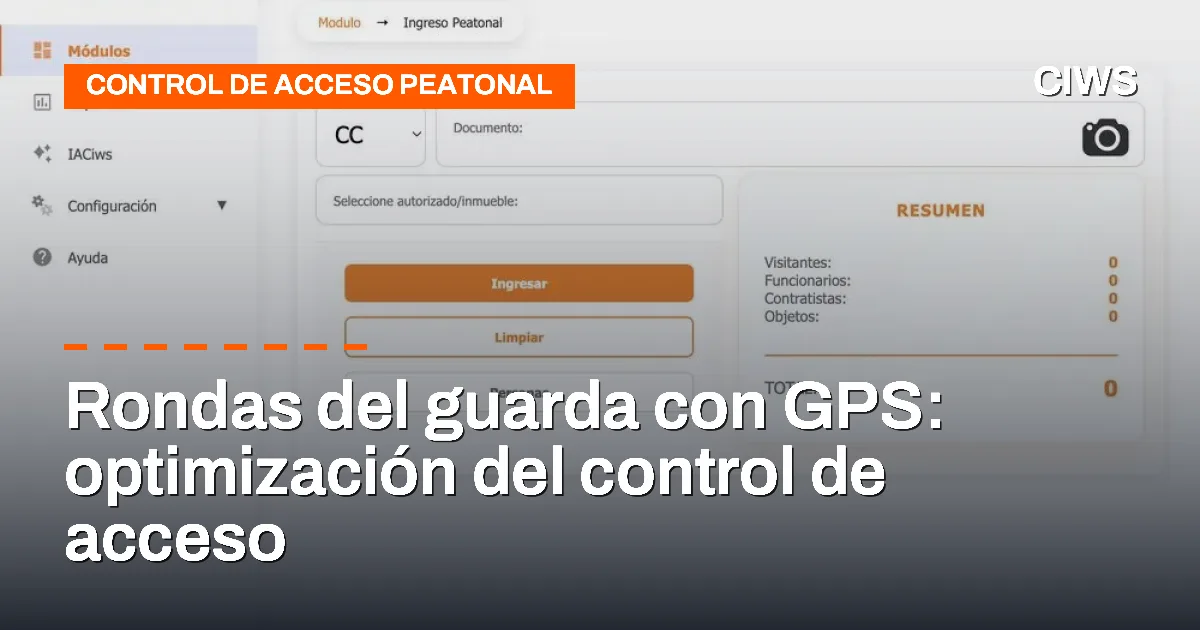
The use of GPS in guard patrols allows security administrators to verify the exact location of guards in real-time during their rounds. This ensures inspections are conducted effectively and any deviation from the agreed plan is immediately detected. Automatic documentation of each route reinforces transparency and accountability in security personnel management.
How the GPS Patrol System Works
The guard patrol system with GPS consists of devices that guards carry with them during their rounds. These devices, typically integrated into a smartphone or dedicated equipment, send the location to a central platform that monitors and records every movement. Administrators can access this information to review routes, times, and any incidents reported during the patrols.
Advantages of Pedestrian Access Control with GPS
- Precision: GPS technology allows for location tracking with a margin of error of just a few meters, ensuring guards cover designated areas.
- Documentation: Routes are automatically recorded, providing a detailed history that can be reviewed at any time.
- Quick Response: Any incident or deviation is notified in real-time, allowing for an immediate response from the security team.
- Resource Optimization: Effective monitoring can lead to better guard allocation, reducing downtime and improving coverage.
Implementation in Your Access Control System
Integrating guard patrols with GPS into your pedestrian access control system is a straightforward process that can significantly enhance security operations. However, it is crucial to verify the compatibility of GPS devices with your existing infrastructure and ensure that personnel are trained to use the technology effectively.
Considerations Before Deciding
Before implementing this technology, consider GPS coverage in your area, as some locations may have weak signal zones. Additionally, assess whether the cost of devices and the management platform fits your budget. Guard patrols with GPS are most beneficial in large and complex areas where constant supervision is essential.
In summary, guard patrols with GPS offer an effective solution to improve pedestrian access control, especially in environments where security and precision in supervision are critical. However, their effectiveness depends on proper implementation and compatibility with existing infrastructure.
Frequently Asked Questions
What devices are used for guard patrols with GPS?
Smartphones or dedicated devices with GPS capability are generally used to record and send location data in real-time.
How is guard privacy ensured?
The systems are designed to record only location during patrols, and data is handled in accordance with current data protection regulations.
Do guard patrols with GPS require an internet connection?
Yes, an internet connection is needed to send location data to the central system and allow real-time monitoring.