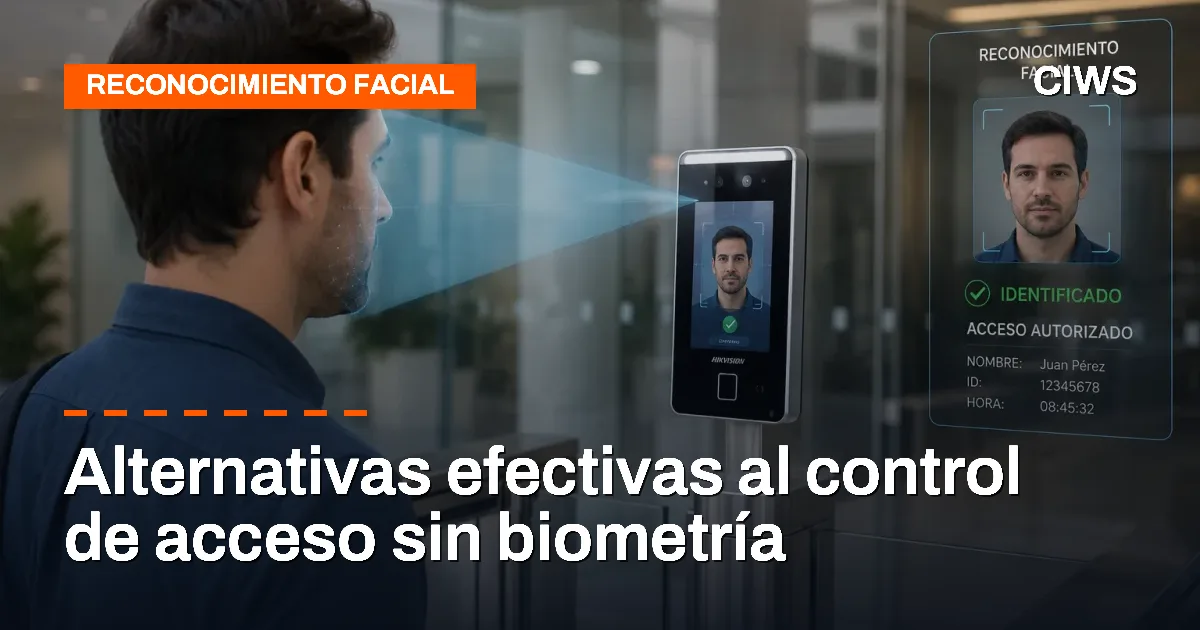
A facial recognition reader in access control identifies individuals by analyzing their unique facial features. This process involves capturing an image of the face, converting it into a digital pattern, and comparing it with a pre-existing database to allow or deny access.
Technical Process of Facial Recognition
Facial recognition begins with capturing an image using a specialized camera. This image is converted into a mathematical model that highlights specific facial features such as the distance between the eyes, nose width, and jaw shape. This model is compared with stored data to verify the individual's identity.
Application in Access Control Systems
In businesses, facial biometric access is primarily used to manage the entry and exit of employees and visitors. It is an effective solution for restricted areas and easily integrates with other security systems, enhancing operational efficiency and reducing the risk of unauthorized access.
Advantages of Facial Biometric Access Control
- Enhanced Security: Facial biometrics are difficult to forge, preventing unauthorized access.
- Convenience: It requires no physical contact or use of credentials, facilitating the flow of people.
- Integration: It integrates with time and attendance management systems, optimizing daily operations.
Considerations Before Implementation
Before opting for a facial reader, assess whether your lighting conditions are adequate, as this factor can influence recognition accuracy. Additionally, consider privacy and comply with regulations such as Colombia's Data Protection Law 1581.
Cases Where Facial Recognition May Not Be Suitable
Facial recognition may not always be the best option in environments with poor lighting or where weather conditions affect visibility. Its effectiveness decreases if users frequently wear items that cover the face.
In summary, the facial reader for access control offers a secure and efficient solution for managing entry in businesses. However, it is crucial to evaluate the specific conditions of your installation to ensure its effectiveness.
Frequently Asked Questions
How is facial data privacy ensured?
Privacy is ensured by complying with regulations such as the Data Protection Law 1581. Facial data is stored securely and used only for authorized purposes.
What happens if lighting conditions are poor?
Lighting conditions can affect facial recognition accuracy. It is advisable to have adequate lighting or use complementary systems that improve visibility.
Is it compatible with other security systems?
Yes, the facial recognition system can be integrated with other access control, time, and attendance management systems, enhancing overall efficiency and security.
See also: Facial Recognition and Biometrics.