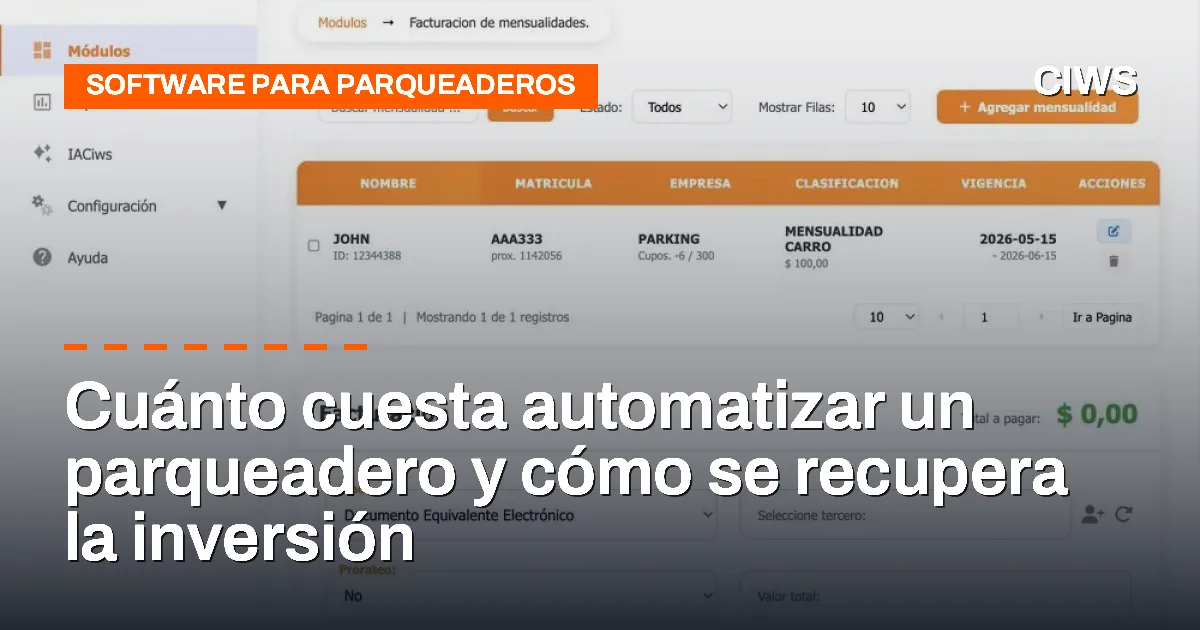
Automating a parking lot in Colombia can cost between COP 50 million and 100 million, depending on factors such as the size of the parking lot, the amount of equipment needed, and the desired level of automation. The initial investment includes management software, license plate recognition cameras, boom barriers, automated pay stations, and other complementary systems.
Factors Influencing Automation Costs
Several elements influence the costs of automating a parking lot. The first is the size of the parking lot, as a larger space will require more equipment and, therefore, a higher investment. Additionally, the type of technology chosen, such as high-precision license plate recognition cameras (with accuracy rates above 95% in optimal conditions) and advanced payment systems, also impacts the total cost.
Another critical factor is the existing infrastructure. A parking lot with modern infrastructure ready for automation can significantly reduce initial installation costs. In contrast, if a complete upgrade of electrical or communication systems is required, costs will increase.
Return on Investment for Parking Lot Automation
The return on investment (ROI) for automating a parking lot is generally achieved between 2 and 5 years. This period depends on the improvement in operational efficiency and the reduction in labor costs that automation provides. By decreasing the need for staff for payment and surveillance tasks, and reducing errors in revenue management, administrators can see a positive impact on their balance sheets.
Additional Benefits of Automation
Beyond financial returns, automating a parking lot offers additional benefits. Security is enhanced through strict control of entries and exits, and the user experience is improved by reducing wait times at access points and payments. Additionally, the system allows real-time monitoring of occupancy, optimizing space management and improving customer service.
Considerations Before Automating
Before deciding to automate a parking lot, it is crucial to assess the current state of the infrastructure and define the specific objectives of the automation. This includes determining whether the main goal is to improve security, increase operational efficiency, or simply modernize the user experience. It is also important to conduct a cost-benefit analysis that considers both initial costs and potential long-term savings.
Automation is not always the ideal solution for all parking lots. In very small facilities or locations with low vehicle turnover, the investment may not be justified. In these cases, it is advisable to consider less costly alternatives or a partial implementation of technologies.
Next Steps
For those considering automating their parking lots, the next step is to conduct a detailed analysis with a trusted provider like CIWS. This includes a technical evaluation of the current facilities and a projection of the expected benefits. Each parking lot has unique needs, and a personalized plan ensures that the investment is as efficient as possible.
Frequently Asked Questions
How long does it take to install an automated system?
The installation time varies depending on the complexity of the project, but typically it can last between 2 and 4 weeks.
What types of payments are integrated into automated systems?
Automated pay stations can accept cash, credit and debit cards, and payments via QR codes.
How does automation affect parking lot security?
Automation enhances security by strictly controlling entries and exits and reducing the risk of human error.
See also: Software for Parking Lots.