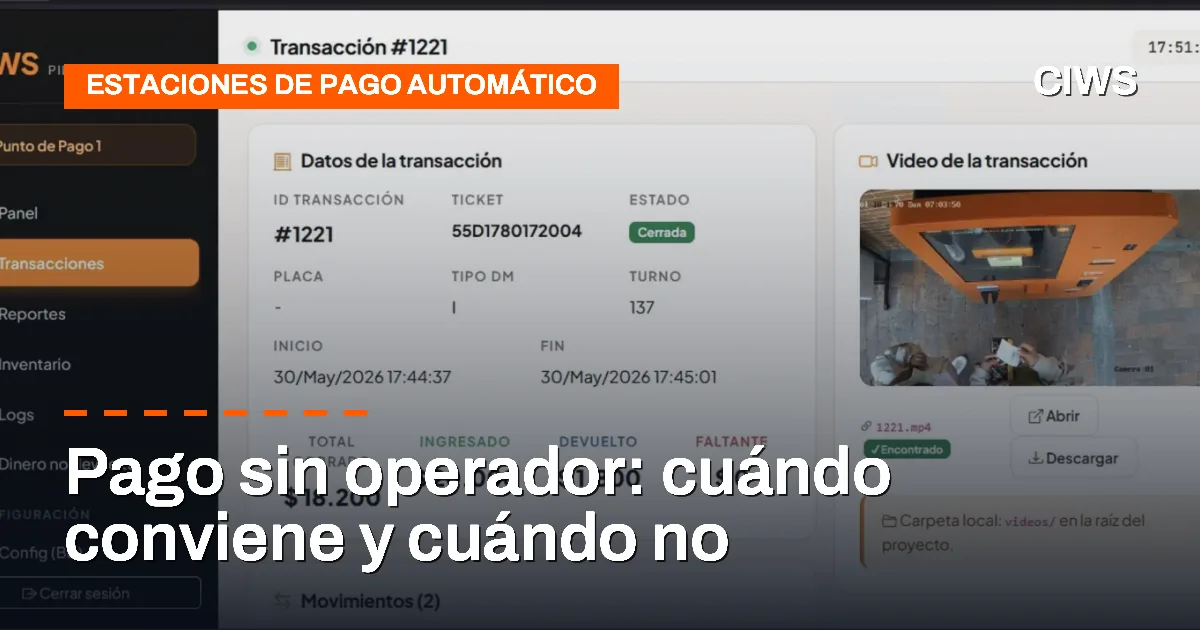
An operator-free payment system in a parking lot can reduce costs and improve operational efficiency, but it is not always the best option for every facility. Considerations such as user volume, audience type, and existing infrastructure are crucial to determine its suitability.
Advantages of Operator-Free Payment
Automating payment in parking lots offers several advantages. Firstly, it significantly reduces operational costs by eliminating the need for cashier staff. Automated parking cashiers can operate 24/7, allowing users to pay their fees at any time of day or night without human assistance. Additionally, parking pay stations with self-service technology are often faster, avoiding queues and enhancing the user experience.
Disadvantages of Operator-Free Payment
Despite its benefits, operator-free payment is not suitable for all parking lots. One of the main disadvantages is the potential lack of support for users facing issues with the payment system. Moreover, in facilities with a high flow of elderly individuals or those less familiar with technology, transitioning to a fully automated system can lead to inconveniences and complaints.
Factors to Consider Before Implementing an Operator-Free Payment System
- User Profile: Assess if your customers are familiar with using self-service technology.
- Traffic Volume: A high-traffic parking lot may benefit more from an automated system than one with fewer users.
- Technological Infrastructure: Ensure the automated payment system is compatible with the existing hardware and software in your parking lot.
- Initial Costs: Consider the investment needed to acquire and install automated pay stations.
When an Operator-Free Payment System Is Not Advisable
Operator-free payment may not be the best option in parking lots where customer support is critical, such as in clinics or hospitals where users may need immediate assistance. Likewise, in areas with poor internet connectivity, an automated system may present more issues than desired.
Conclusion
Deciding to implement an operator-free payment system in a parking lot requires a detailed analysis of the specific needs and characteristics of each facility. Carefully evaluate the benefits and potential drawbacks before making a decision. In cases where customer support or technological infrastructure is inadequate, maintaining an operator may be the most prudent option.
Frequently Asked Questions
How does operator-free payment affect the operational cost of a parking lot?
Implementing an operator-free payment system can reduce operational costs by eliminating the need for cashier staff, although it may require a significant initial investment.
Is good connectivity necessary for an automated payment system?
Yes, good internet connectivity is crucial for the efficient operation of automated pay stations, as they rely on online communication to process transactions.
What types of parking lots benefit most from operator-free payment?
Parking lots with high traffic volume and users familiar with self-service technology tend to benefit most from an operator-free payment system.
See also: Automated Pay Stations.