Managing parking slots and access zones by schedule in residential complexes involves assigning time and space restrictions to permitted vehicles. This not only enhances security but also optimizes the use of available space. By defining specific schedules for residents, visitors, and service providers, congestion can be significantly reduced, ensuring that only authorized individuals access the complex.
How does vehicle access control by schedule work?
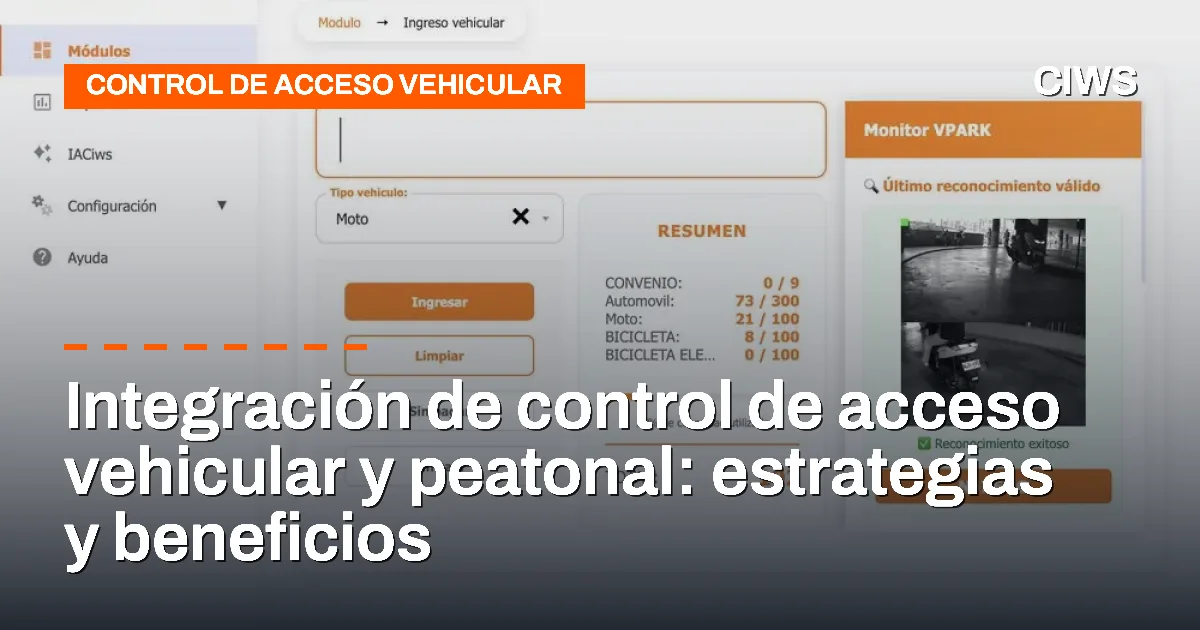
Vehicle access control by schedule uses specific software to assign temporary permissions to each vehicle. An efficient system should offer the capability to manage different types of users, such as residents, visitors, and service personnel, each with their own schedules and access areas. For example, a resident might have 24-hour access, while a visitor would only have access during pre-established hours.
Benefits of time-based management in access zones
Implementing a time-based management system offers several benefits:
- Space optimization: Allows more efficient use of parking areas by assigning slots according to demand.
- Increased security: By restricting access to specific times, unauthorized vehicle entry is reduced.
- Improved traffic flow: Controlling access times prevents congestion during peak hours.
Requirements for implementing a vehicle access management system
To implement an effective system, it is essential to have:
- Access management software: Should allow centralized configuration and monitoring of permissions and schedules.
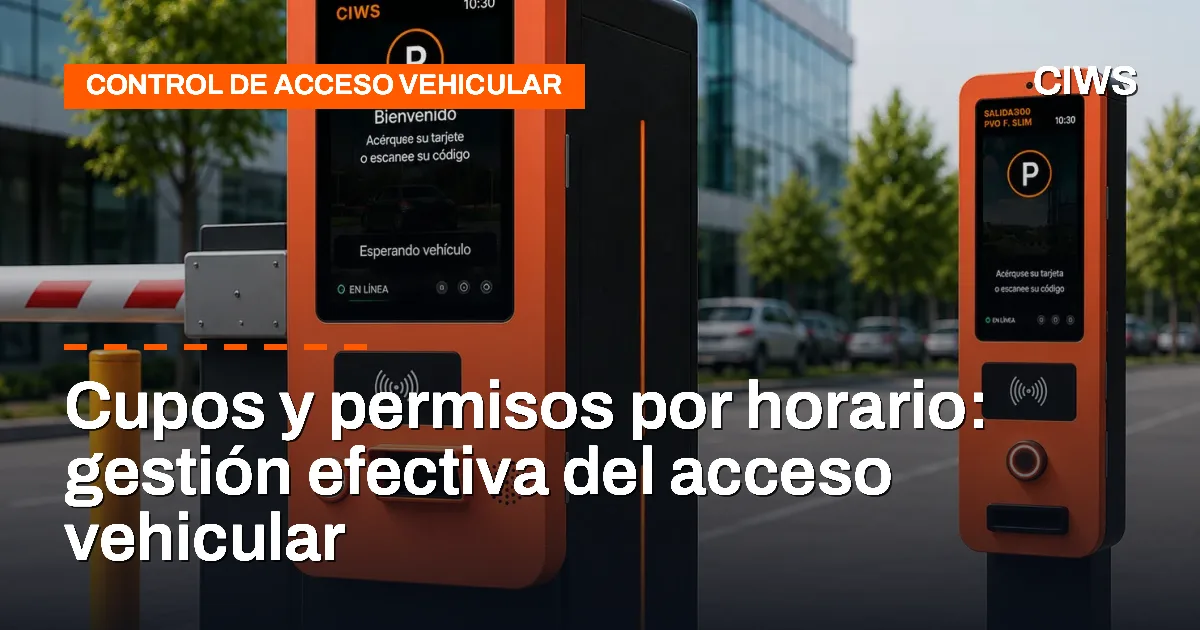
- Appropriate hardware: LPR cameras and automatic boom barriers for vehicle registration and control.
- Staff training: Training in system use to ensure proper operation and maintenance.
Limitations and considerations before deciding
Before deciding to implement a time-based management system, consider the following:
- Initial investment: Installation and maintenance costs should be evaluated against expected benefits.
- Existing infrastructure: Compatibility with current systems is crucial to avoid costly replacements.
- Complex adaptation: Ensure that residents and users are informed and agree with the new access policies.
In conclusion, managing parking slots and access zones by schedule is an effective measure to optimize resources and increase security in residential complexes. However, it is essential to conduct a detailed analysis of needs and available resources before implementation.
Frequently Asked Questions
What type of software is needed to manage vehicle access?
A specific software is required that allows configuring and monitoring access permissions by schedule for different types of users such as residents and visitors.
How does implementing schedules affect traffic flow?
Controlling access schedules helps prevent congestion during peak hours, thus improving traffic flow within the residential complex.
Is it necessary to change the entire infrastructure to implement this system?
It is not always necessary to change the entire infrastructure, but it is important that the new system is compatible with existing equipment.