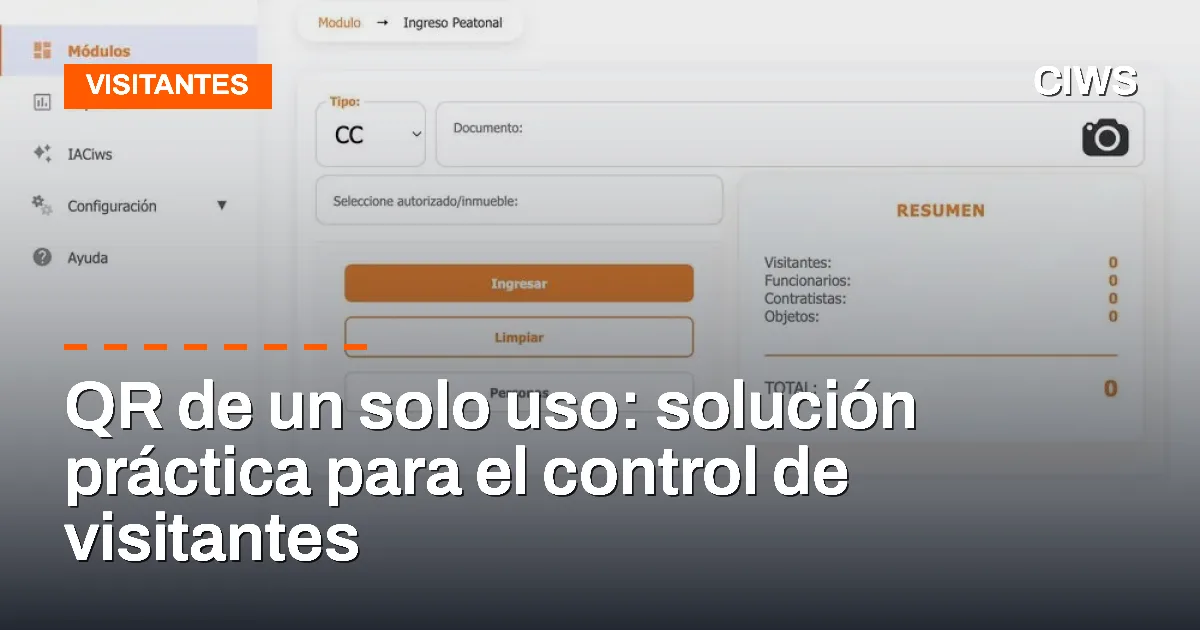
Using single-use QR codes for visitors offers an effective solution for visitor access control in residential complexes. These codes allow visitors to enter securely and in a controlled manner, reducing the need for manual processes and minimizing the risk of unauthorized access. By generating a unique QR for each visit, each access is ensured to be unique and verifiable.
Advantages of Single-Use QR for Visitor Management
Implementing single-use QR codes in visitor access management offers multiple benefits. First, security is enhanced by limiting access to individuals previously authorized by residents. Additionally, management becomes simpler as the residential complex's visitor software automatically records each visitor's entry and exit, integrating with the digital logbook for detailed tracking.
Another advantage is ease of use: residents can generate and send a QR to their visitors via mobile apps or emails. This eliminates the need for security guards to manually verify guest lists, streamlining the entry process.
How the Single-Use QR System Works
The process of using single-use QR codes begins when a resident requests a code for a visitor. This code is generated by the residential complex's software, including details such as the visitor's name, the date and time of the visit, and the allowed duration of access. Upon arrival, the visitor scans the code on an access control device, allowing entry only during the specified time.
Single-use QR codes are temporary and automatically expire after the assigned time, preventing them from being reused for unauthorized future access. Additionally, any attempt to duplicate or reuse the code will be denied by the system.
Considerations Before Implementing Single-Use QR
Before opting for this technology, it's important to evaluate certain aspects. First, consider whether your community has the necessary infrastructure for implementing a QR scanning system, such as reading devices and internet connectivity. Also, review security protocols to ensure visitor data management complies with Colombia's Data Protection Law 1581.
Additionally, consider your community's profile: in residential complexes with high visitor turnover or frequent events, single-use QR codes can be especially beneficial. However, in smaller communities or those with fewer visitors, the implementation cost might not justify the benefit.
Conclusion
Single-use QR codes are a practical and effective tool for improving visitor access control in residential complexes. They facilitate security management, optimize the access process, and ensure each visit is properly controlled and recorded. Evaluating your community's specific needs will help determine if this system is the right choice for you.
Frequently Asked Questions
How are single-use QR codes generated?
Single-use QR codes are generated through specialized software that allows residents to request a code for their visitors. This code contains specific information about the visit and is sent to the visitor via digital means.
What happens if the visitor cannot scan the QR?
If the visitor has trouble scanning the QR, security personnel can manually verify their authorization in the visitor management system, provided the visit was previously registered.
Is it safe to use single-use QR for visitor control?
Yes, single-use QR codes are safe as they are designed to be temporary and unique. This minimizes the risk of unauthorized access, as the code expires after the scheduled visit.