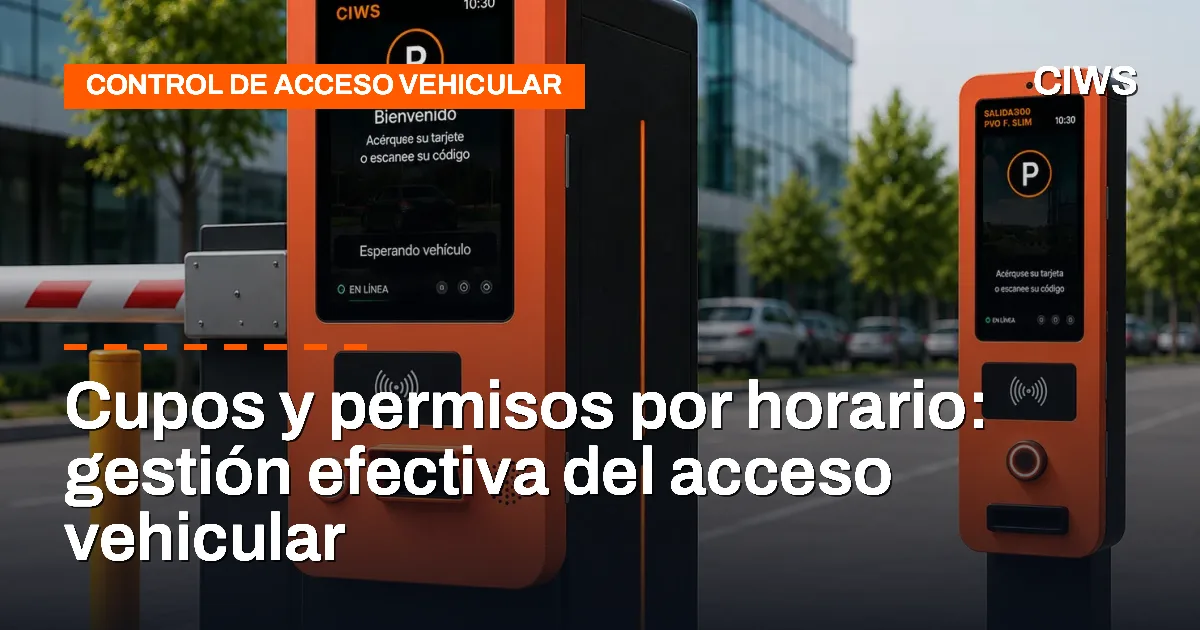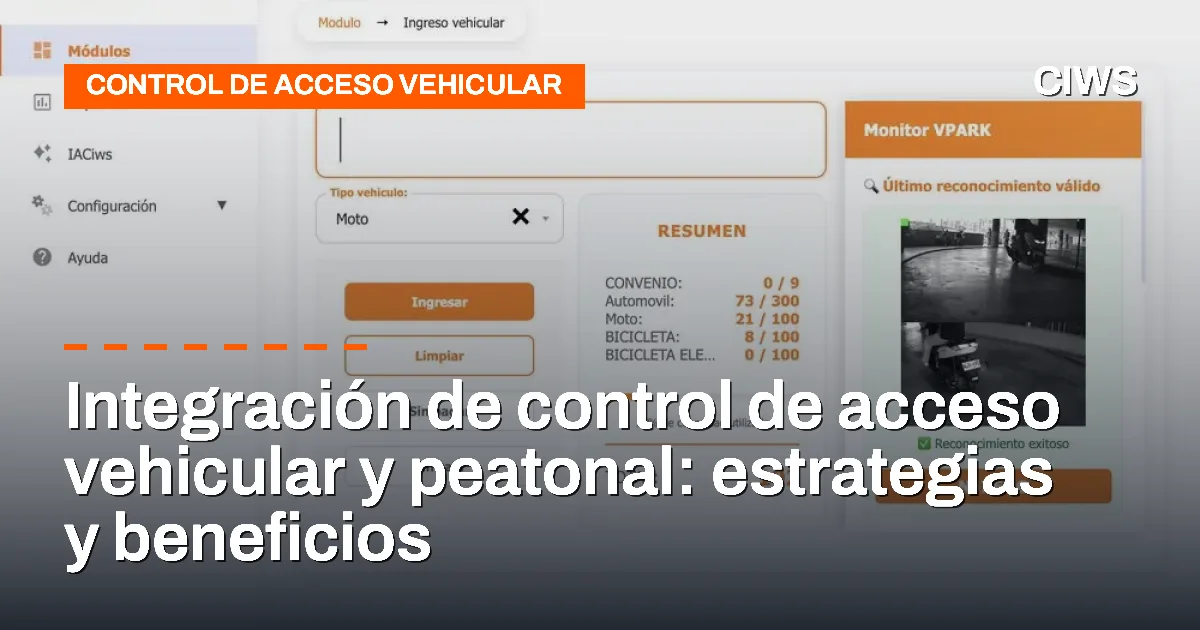
A vehicle access control system in residential complexes must ensure that only authorized individuals enter the premises. This is achieved through precise vehicle identification, whether via license plate recognition (LPR), proximity cards, or RFID tags. These technologies allow for automatic and secure vehicle registration, preventing unauthorized entry.
Essential Features of Vehicle Access Control
For vehicle access control to be effective in a residential complex, it must have certain features:
- Precise Identification: License plate recognition (LPR) systems have an accuracy of over 95% under ideal conditions, allowing for efficient access.
- Integration with Other Systems: The vehicle access platform should integrate with management software to monitor and record entries and exits.
- Authentication Options: In addition to LPR, the system can include proximity cards or RFID tags for greater flexibility.
- Monitoring and Reporting: Generating access reports and real-time alerts is crucial for the security and management of complexes.
Benefits of Vehicle Access Control in Residential Complexes
Implementing a vehicle access control system in a residential complex offers several benefits:
- Increased Security: Restricts access to authorized vehicles only, reducing the risk of intrusions.
- Organization and Efficiency: Automated control reduces wait times and prevents congestion at entrances.
- Detailed Record: Provides a complete history of entries and exits, useful for audits and security management.
What to Consider Before Implementing a Vehicle Access Control System
Before choosing a system, assess the specific needs of the residential complex, such as traffic volume and required security features. Also consider compatibility with existing systems and future expansion capabilities.
When a Vehicle Access Control System is Not Suitable
If the residential complex has minimal vehicle flow or if space constraints do not allow for adequate infrastructure for the equipment, a complex vehicle access control system may not be necessary. In these cases, simpler solutions like manual barriers or security personnel may suffice.
The next step when considering a vehicle access control system is to conduct a detailed technical assessment of the site to identify the best implementation options.
Frequently Asked Questions
What technology is most effective for vehicle access control in residential complexes?
License plate recognition (LPR) technology is highly effective due to its accuracy in identifying authorized vehicles.
How do vehicle access control systems integrate with other security systems?
These systems can integrate with management and security software to monitor access, generate reports, and activate alarms if necessary.
Is a vehicle access control system necessary in complexes with low traffic?
It is not always necessary. In complexes with low traffic, manual solutions or security personnel may be sufficient to control access.