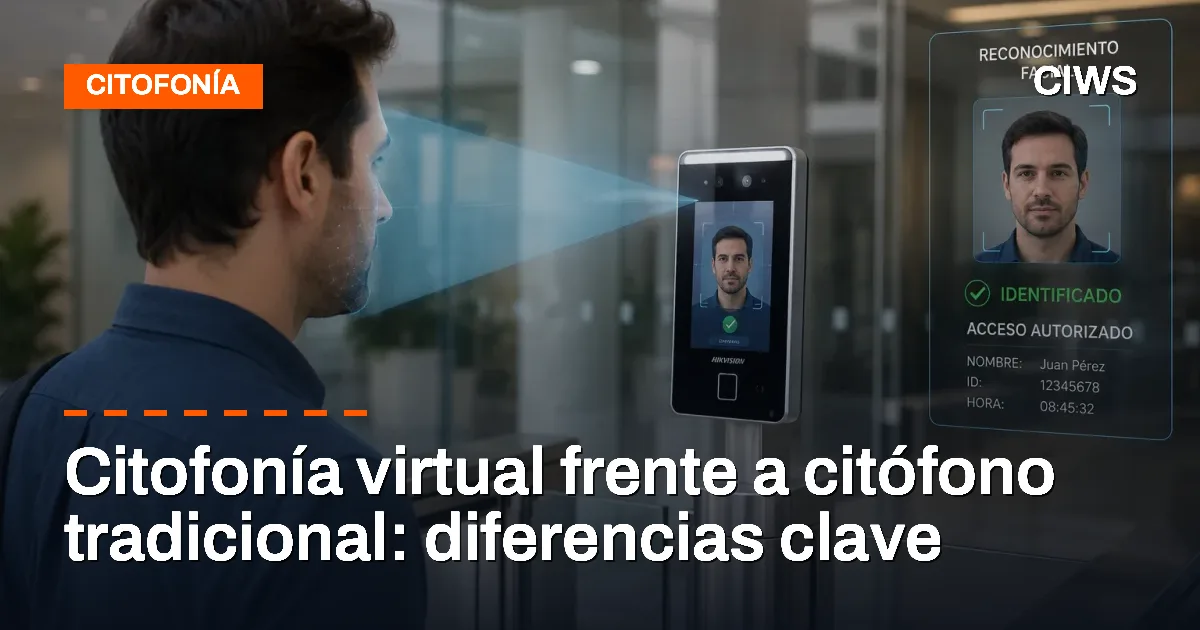
Virtual intercom offers flexibility and scalability by enabling communication through mobile devices and cloud platforms, unlike traditional intercoms that rely on direct wired connections. This advancement facilitates integration with smart systems and improves access management, essential for administrators and boards of residential complexes looking to modernize their communication systems.
Advantages of Virtual Intercom
One of the main advantages of virtual intercom is its ability to integrate with other systems, such as IP video intercoms and access controls. This allows for managing entries and exits from anywhere with an internet connection. Additionally, its maintenance is simpler, as updates are performed remotely.
Limitations of Traditional Intercoms
Traditional intercoms require a wired infrastructure, which can increase installation and maintenance costs. Their ability to integrate with other systems is limited, and their functionality is restricted to the local area, without options for remote management or notifications on mobile devices.
Feature Comparison
| Feature | Virtual Intercom | Traditional Intercom |
|---|---|---|
| Installation | Low cost, requires internet connection | High cost, requires wiring |
| Scalability | High, adapts to growing needs | Low, limited by infrastructure |
| Maintenance | Remote, automatic updates | Local, requires physical intervention |
| Integration | Compatible with smart systems | Limited, no advanced integration |
Considerations Before Choosing
Before deciding between a virtual intercom system and a traditional one, it's important to evaluate the existing infrastructure and the communication needs of the property. If flexibility and integration with modern technologies are desired, virtual intercom is the best option. However, for properties with an already established system and no remote management requirements, traditional intercom can still be a valid choice.
Conclusion
The choice between virtual and traditional intercom depends on the specific needs of your property and its current infrastructure. Consider installation and maintenance costs, as well as the possibility of integration with other systems before making a final decision.
Frequently Asked Questions
What is virtual intercom?
Virtual intercom is a communication system that allows managing access and communications using the internet and mobile devices, eliminating the need for traditional wired infrastructure.
What are the advantages of an IP video intercom?
An IP video intercom allows you to see and communicate with visitors from anywhere with internet access, offering greater security and convenience to users.
Is the installation of virtual intercom expensive?
The installation of virtual intercom is usually less expensive than traditional systems because it does not require extensive wiring, just a good internet connection.