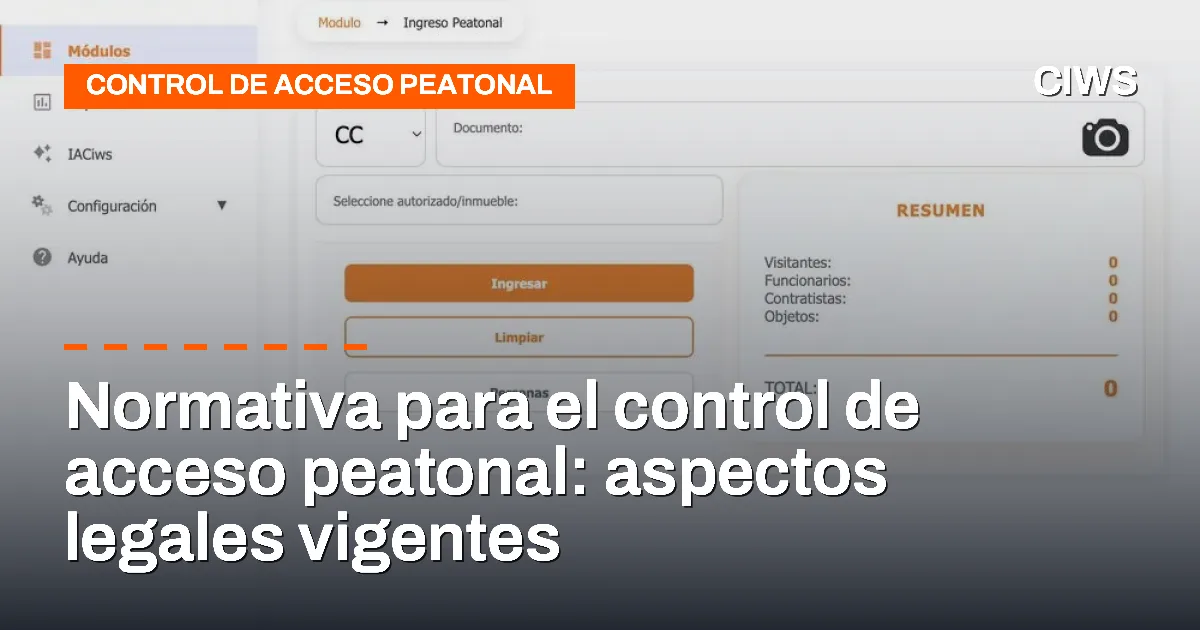
A pedestrian access control system addresses key security and entry management issues in buildings. This type of system allows you to control who enters and exits the premises, ensuring that only authorized individuals can access the building. Additionally, it helps record and monitor these movements, providing valuable data for building management.
Advantages of a Pedestrian Access Control System
Implementing a pedestrian access control system offers several concrete advantages. Firstly, it enhances security by reducing the risk of unauthorized access. By using technologies such as facial biometrics, QR codes, and credentials, it ensures that only pre-approved individuals can enter. This is crucial in buildings with high daily traffic, such as offices and residences.
Secondly, it optimizes the management of people flow. A good access control system allows for smoother and more orderly transit, preventing crowding and improving user experience. It also facilitates compliance with security protocols by automatically recording each entry and exit.
Benefits of Pedestrian Access Control
The benefits of a pedestrian access control system extend beyond security. It enables effective management of building resources, as the collected data can be used to identify usage patterns and adjust operations accordingly. For example, it can help define peak hours and better plan security staffing.
Moreover, these systems are flexible and scalable, meaning they can adapt to the specific needs of the building and grow along with it. From solving security issues to improving operational efficiency, a pedestrian access control system is an essential tool for modern building management.
What to Consider Before Deciding
Before choosing a pedestrian access control system, evaluate the specific requirements of your building. Consider the volume of people circulating daily and what levels of security are necessary. It's also important to review the system's compatibility with existing technological infrastructures and its ease of use for end users.
In some cases, a pedestrian access control system may not be the right option. If the building has low foot traffic or if the investment is not justified by improvements in security and management, simpler or more economical solutions may be needed.
Conclusion
A pedestrian access control system can transform the security and management of your building by allowing precise control over who enters and exits. Before implementing it, consider the specific needs of your property and ensure that the selected system aligns with your security and management objectives.
Frequently Asked Questions
What types of technology are used in these systems?
Pedestrian access control systems typically use facial biometrics, QR codes, and credentials to verify the identity of individuals entering.
How does it improve security in a building?
It enhances security by ensuring that only authorized individuals can access the building, thereby reducing the risk of unwanted intrusions.
Can it be integrated with other security systems?
Yes, pedestrian access control systems can be integrated with security cameras and alarm systems for more comprehensive management.