Facial templates in access control systems are typically stored on secure servers, where they are encrypted to protect individual privacy. This practice ensures that biometric information is safeguarded against unauthorized access and misuse, complying with regulations such as Colombia's Law 1581 on personal data protection.
What is a Facial Template in Access Control?
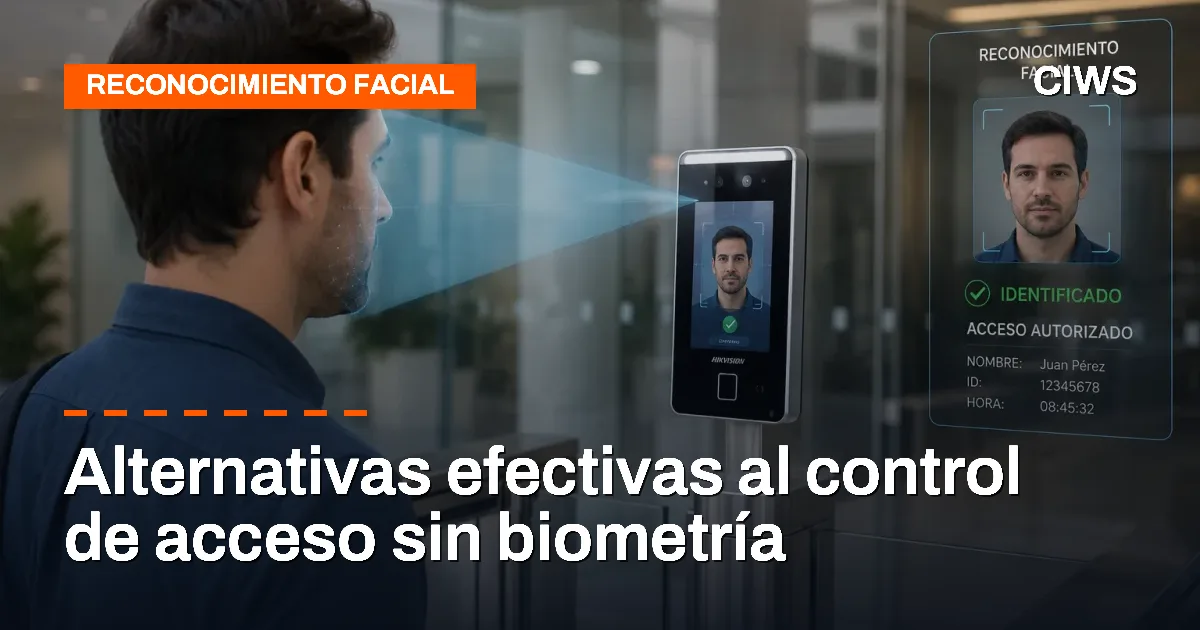
A facial template is a mathematical representation of a person's facial features. It is generated from an image captured by a facial access control reader and stored as a data set that cannot be reversed into an original face image. This enhances security, as even if the data is compromised, the full facial image cannot be reconstructed.
Security in Storing Facial Templates
Secure storage of facial templates is crucial to ensure the privacy and integrity of the access control system. Modern systems use advanced encryption to protect these templates, ensuring that only authorized personnel can access them. Additionally, it is important for the system to comply with local data protection regulations, such as Law 1581 in Colombia, to avoid penalties and protect user rights.
Benefits of Facial Biometrics for Businesses
- Enhanced Security: Facial biometrics in businesses eliminates the risk of losing or stealing physical credentials.
- Operational Efficiency: Access is quick and contactless, ideal for high personnel flow.
- Regulatory Compliance: Facial biometrics facilitates compliance with internal and external security policies.
Considerations When Implementing Facial Access Control
Before implementing a facial template-based access control system, it is essential to evaluate several factors. Ensure that the provider offers solutions that comply with local data protection standards. Also, make sure the system is compatible with your organization's specific needs, such as user volume and environmental lighting conditions.
When Facial Biometrics May Not Be Suitable
Facial biometrics may not be the best option for all organizations. In environments where lighting conditions are highly variable or in places with high exposure to dust and humidity, facial readers may have reduced performance. In such cases, integrating other access control methods, like cards or QR codes, can ensure reliable access.
Evaluating these aspects and selecting a system that aligns with the specific needs of your environment is key to successfully implementing a biometric access control system.
Frequently Asked Questions
How are stored facial templates protected?
They are protected through advanced encryption on secure servers, complying with data protection regulations like Law 1581 in Colombia.
What happens if lighting conditions are poor?
Facial readers may have reduced performance under inadequate lighting conditions. In such cases, integrating alternative access control methods is recommended.
What are the advantages of facial biometrics in businesses?
It offers enhanced security, operational efficiency, and facilitates compliance with security regulations, eliminating risks associated with physical credentials.