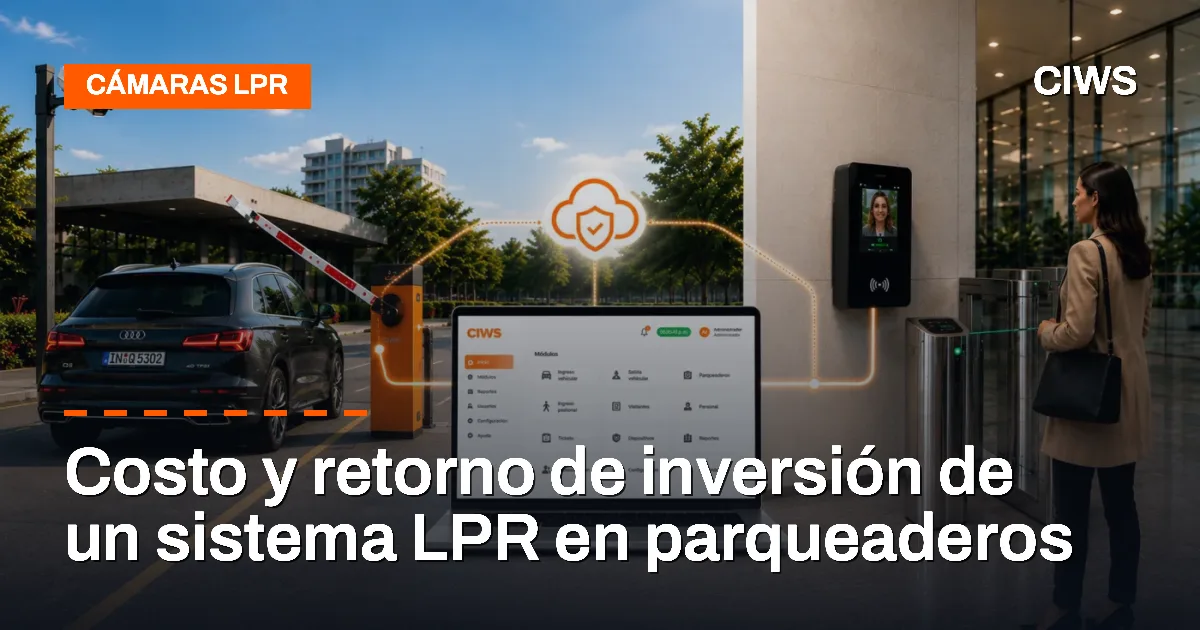
The cost of implementing a lane with LPR (license plate recognition) cameras in a parking lot can range from 10 to 20 million Colombian pesos. This range depends on factors such as the number of lanes, site characteristics, and additional options selected, such as integration with other access control systems or DIAN e-invoicing.
Cost Components
The costs for an LPR system include hardware, which covers cameras and servers, specialized software for license plate recognition, and installation and configuration. Added to this are the costs of periodic maintenance and possible software updates to maintain the system's accuracy and efficiency. Maintenance can represent about 10% of the initial cost each year.
Long-term Benefits of an LPR System
An LPR system provides benefits that contribute to the return on investment. Automating vehicle entry and exit reduces the need for personnel, lowering labor costs. Additionally, it enhances security by automatically recording plates, facilitating vehicle identification in case of incidents. According to studies, operational cost reductions can reach up to 30%.
Return on Investment of the LPR System
The return on investment (ROI) of an LPR system can be observed in less than two years thanks to operational efficiency and cost reduction. When calculating ROI, consider not only payroll savings but also the reduction in losses due to human error and increased user satisfaction from faster access.
Cost and Benefit Comparison
| Element | Estimated Cost | Benefit |
|---|---|---|
| Hardware and Software | 10-20 million COP | Automation and accuracy |
| Annual Maintenance | 10% of initial cost | Updates and support |
| Staff Reduction | - | Up to 30% less in labor costs |
| Enhanced Security | - | Accurate vehicle registration |
Considerations Before Deciding
Before deciding to implement an LPR system, it is crucial to evaluate the daily vehicle flow, available budget, and existing infrastructure in the parking lot. An LPR system is ideal for parking lots with high traffic volume where security and control are priorities.
When Might an LPR System Not Be the Best Option?
If the parking lot has low traffic volume or the budget is limited, investing in an LPR system might not be justified. In these cases, more economical alternatives, such as manual access controls, might be more appropriate until business growth allows for a larger investment.
Ultimately, evaluating the cost and return on investment of an LPR system should be based on specific parking lot data, considering both immediate benefits and long-term savings.
Frequently Asked Questions
What is the initial cost of an LPR system for a lane?
The initial cost of an LPR system for a lane can vary between 10 and 20 million Colombian pesos, depending on various factors such as the parking lot's infrastructure and integration options.
How long does it take to recover the investment in an LPR system?
The return on investment for an LPR system is generally observed in less than two years, thanks to reduced operational costs and improved parking lot efficiency.
What benefits does an LPR system offer in a parking lot?
An LPR system offers benefits such as automated access, reduced personnel costs, improved security, and faster, more efficient access for users.