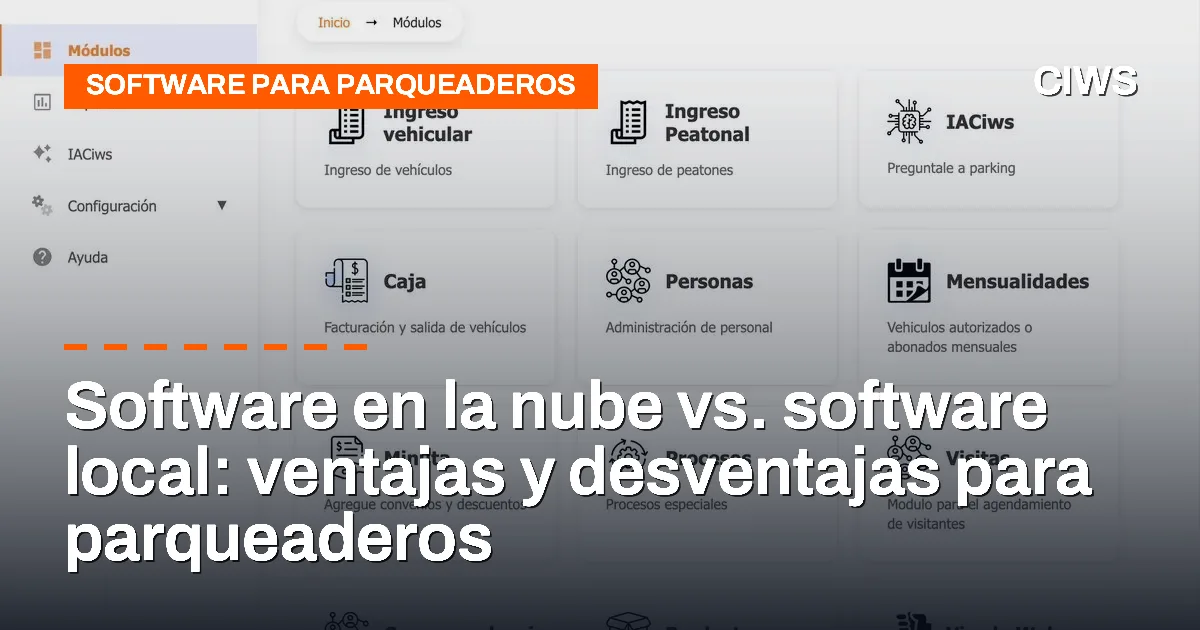
Automatic license plate recognition (LPR) in a parking lot identifies the license plates of vehicles entering and exiting, enabling efficient control of operations. This system uses specialized cameras that capture images of the plates and process them through software designed to convert that visual information into alphanumeric data.
Components of the License Plate Recognition System
A license plate recognition system primarily consists of LPR cameras and processing software. The cameras are strategically positioned to capture the image of the plate when the vehicle enters or exits the parking lot. These cameras perform best with adequate lighting and conditions where the plate is clean and visible, achieving accuracy rates above 95%.
How Parking Software Integrates License Plate Recognition
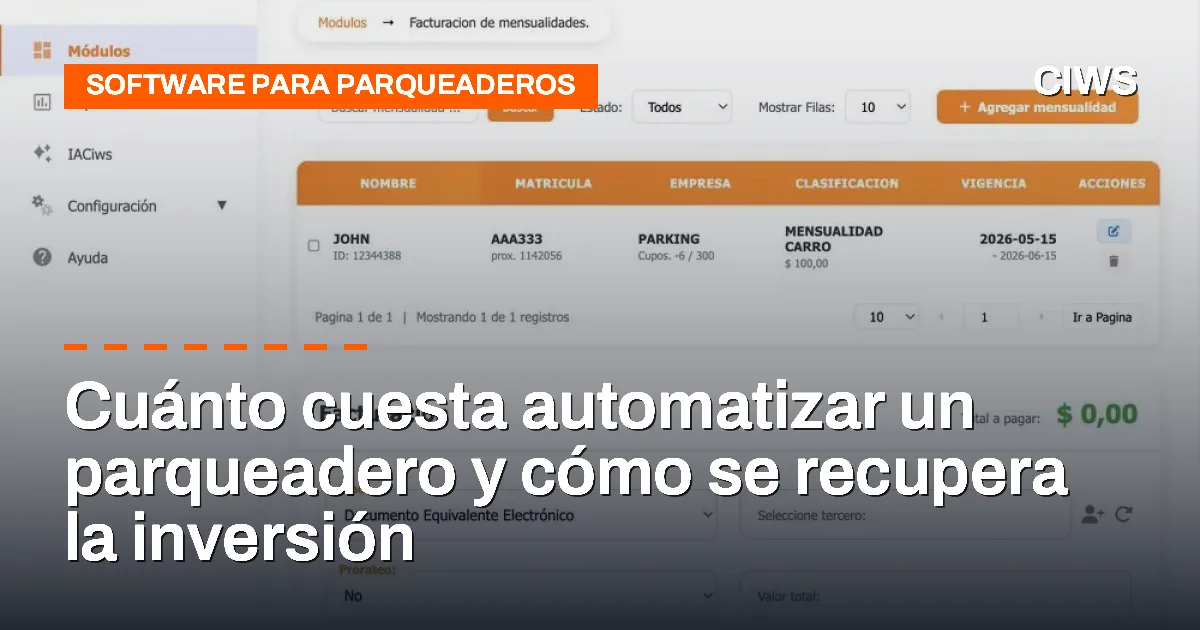
The parking software receives the alphanumeric data from the plates and uses it for multiple functions: access authorization, fee calculation based on the duration of stay, and automatic DIAN e-invoicing. This integration optimizes parking lot control by reducing human errors and speeding up vehicle flow.
Conditions for Optimal System Operation
For optimal operation, the license plate recognition system requires several conditions:
- Lighting: Adequate lighting is crucial to capture clear images of the plates.
- Plate Quality: Plates should be clean and in good condition to improve accuracy.
- Positioning: Cameras must be placed at the correct height and angle to maximize image capture.
Limitations and When Not to Apply This Technology
Automatic license plate recognition may not be effective in low visibility conditions, such as at night or in poorly lit environments. Additionally, very dirty or damaged plates can reduce system accuracy. In these cases, it is important to consider complementary access control systems.
Before deciding to implement this technology, evaluate the parking lot environment, vehicle flow, and the condition of the plates you typically receive. This will help you determine if automatic license plate recognition is the right solution.
In summary, automatic license plate recognition significantly improves parking lot control efficiency by automating processes. However, its application should be evaluated based on the specific conditions of the location and vehicle flow.
Frequently Asked Questions
What is the accuracy of automatic license plate recognition?
Accuracy can exceed 95% with clean and well-lit plates, but decreases in low visibility conditions or with damaged plates.
Does the system work at night?
The system can work at night if there is adequate lighting for the cameras. However, in very low light conditions, accuracy may decrease.
What happens if a plate is damaged or dirty?
Damaged or dirty plates can affect recognition accuracy. It is advisable to keep plates in good condition for optimal performance.