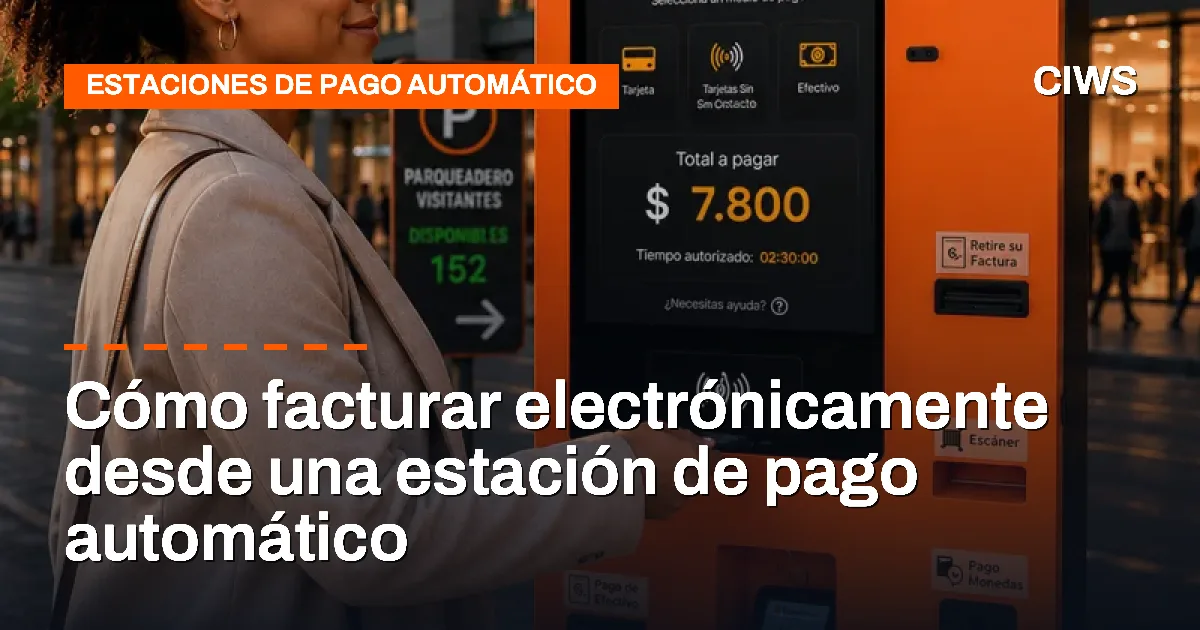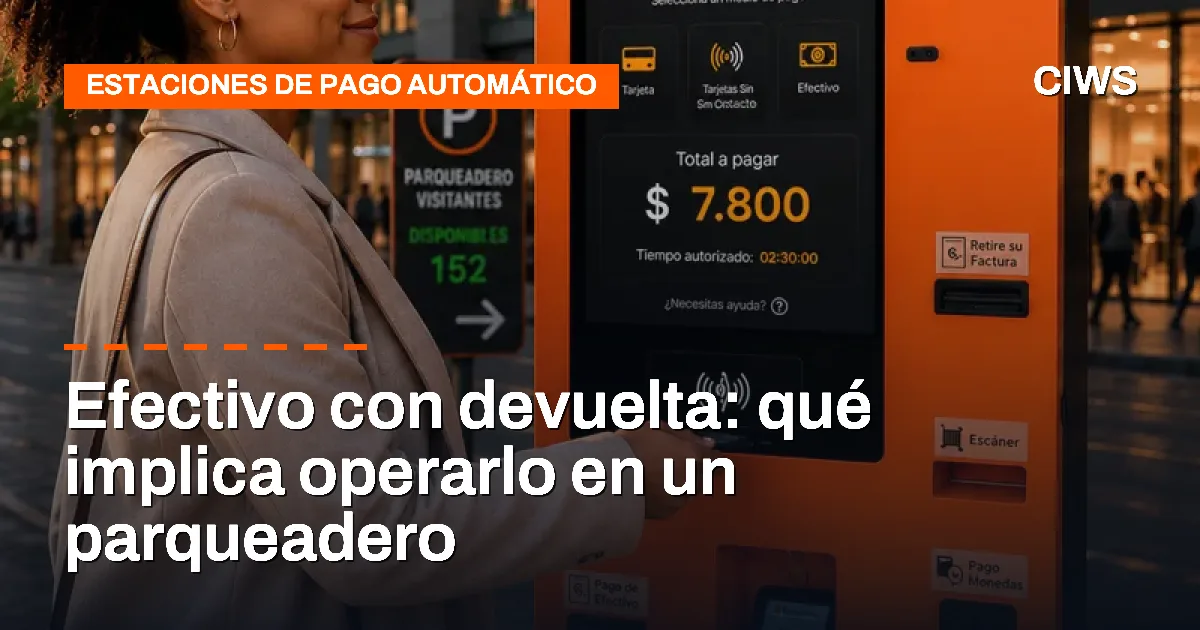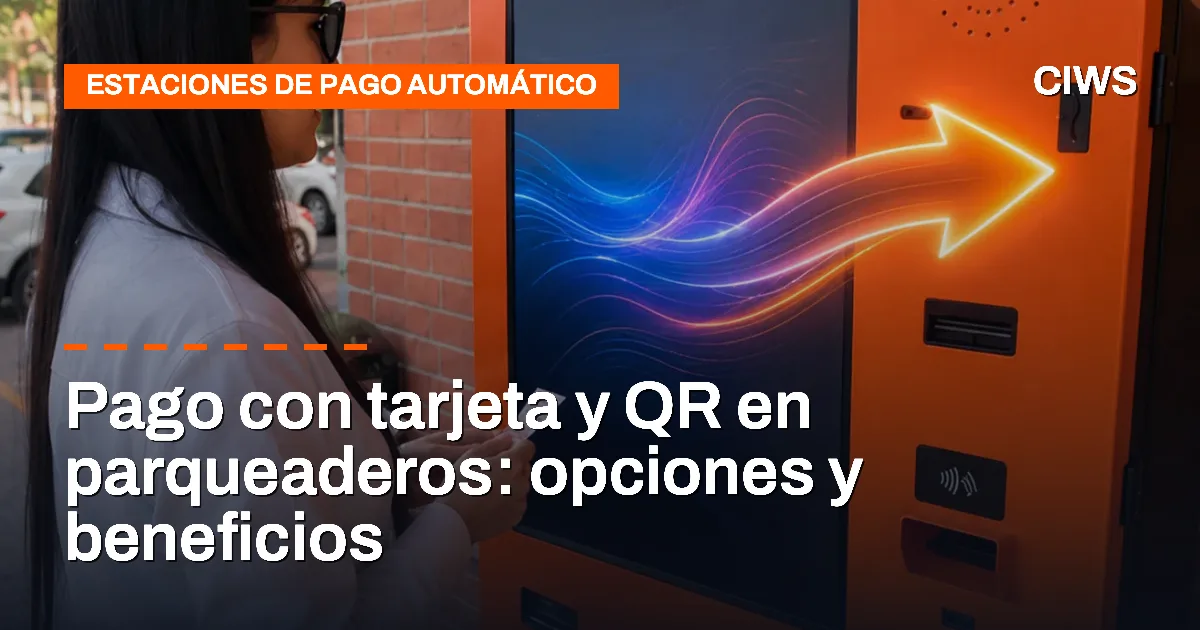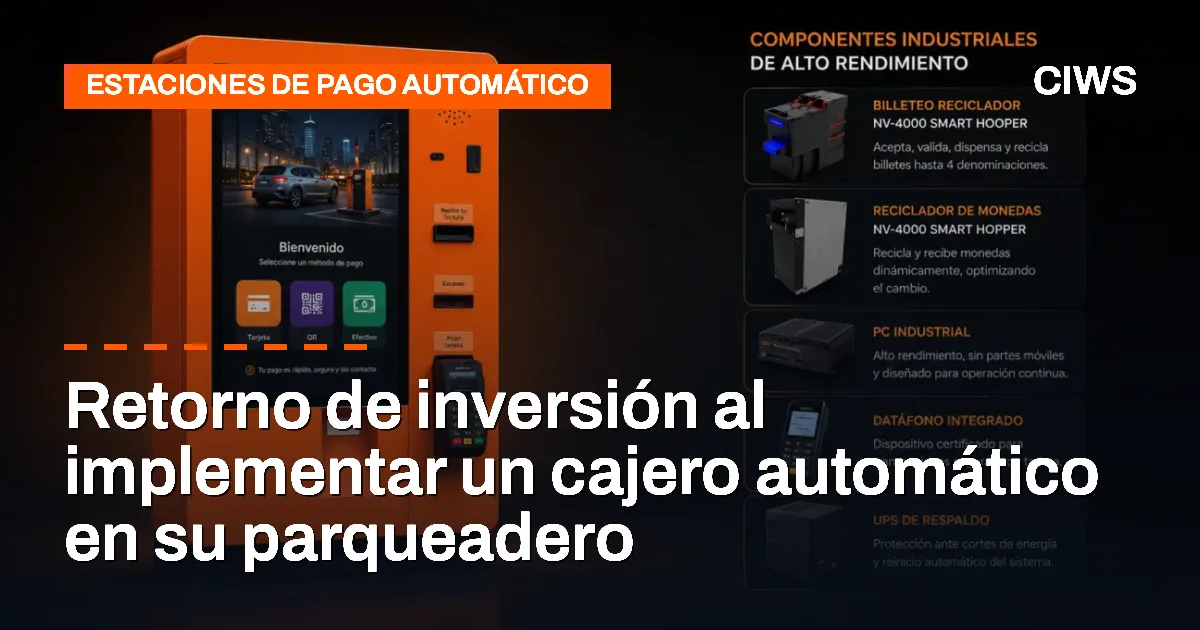
The return on investment from implementing an automated pay station in your parking lot is measured in savings on operational costs and improved service efficiency. An automated pay station allows for operator-free payments, reducing payroll expenses and minimizing human errors. Additionally, it speeds up the payment process, enhancing user experience and increasing vehicle turnover.
Initial and Operational Costs of the Automated Pay Station
The cost of installing an automated pay station includes acquiring the equipment, its installation, and integration with the parking management system. This initial expense can range from 20 to 40 million COP, depending on the features and complexity of integration. Added to this are recurring operational costs, such as maintenance and software updates.
Savings on Personnel Costs
An automated pay station for parking lots eliminates the need for staff dedicated exclusively to fee collection. This represents significant savings in salaries, benefits, and other personnel-related costs. For a parking lot operating 24 hours, savings could reach up to 50% of personnel-related operational costs, depending on the size and operation of the parking lot.
Improvements in Service Efficiency
Implementing an automated pay station improves service efficiency by reducing wait times for users. Customers appreciate being able to make quick and secure payments without delays or human errors. This not only enhances customer satisfaction but also increases the operational capacity of the parking lot by allowing for greater vehicle turnover.
Investment Return Analysis
The return on investment is generally observed over a period of 12 to 24 months. This timeframe depends on various factors, such as the number of daily transactions, savings on personnel costs, and increased revenue from better vehicle turnover. The key is to conduct a detailed analysis of these factors before making the investment decision.
Factors to Consider Before Deciding
- Traffic Volume: A parking lot with high vehicle flow will see a quicker return.
- Current Personnel Costs: The higher the personnel expenses, the greater the savings with an automated pay station.
- Technological Integration: Ensure the automated pay station is compatible with your current system.
- Maintenance and Support: Consider the costs and availability of technical support.
Cases Where It Is Not Recommended
In parking lots with low traffic volume, the return on investment may be less evident. If vehicle flow is limited, savings on personnel costs and efficiency improvements may not justify the initial investment. It is crucial to thoroughly analyze the flow and costs before deciding.
The next step is to evaluate the specific costs and benefits for your particular situation in detail. Consider not only immediate savings but also long-term improvements in operation and user experience.
Frequently Asked Questions
How much does it cost to install an automated pay station in my parking lot?
The cost can vary between 20 and 40 million COP, depending on the features and system integration needs.
How much can I save on personnel costs with an automated pay station?
Savings can reach up to 50% of personnel-related costs, especially in 24-hour operations.
How soon will I see a return on my investment?
The return on investment is generally observed over a period of 12 to 24 months, depending on vehicle flow and current operational costs.
See also: Automated Pay Stations.