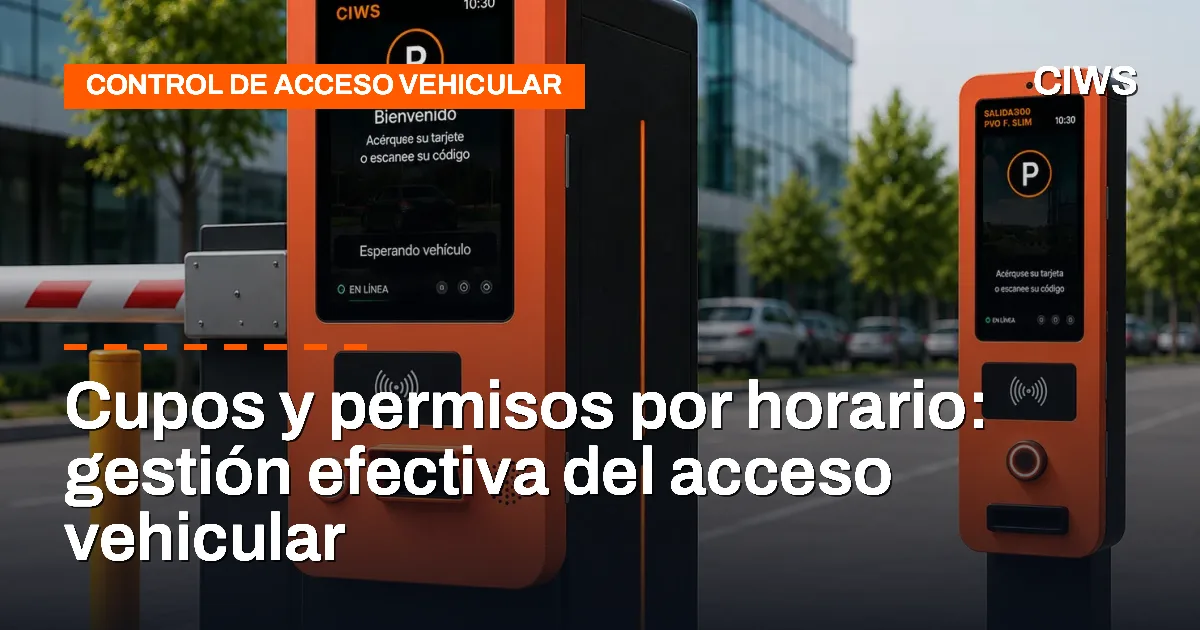
Assigning time-slot permits is essential for vehicle access control, allowing for efficient distribution of available space in any parking lot. This approach organizes vehicle entry and exit, minimizing wait times and optimizing space usage.
Importance of Time-Slot Permits in Vehicle Access
Time-slot permits enable proper management of vehicle flow, preventing congestion and maximizing parking lot usage. In spaces with limited capacity, such as shopping centers or clinics, correct permit allocation ensures authorized users have access when needed.
How Time-Slot Permits Work
The time-slot permit system establishes time frames for vehicle access, assigning each slot to a specific user or vehicle. This is managed through specialized software that handles reservations and verifies authorizations in real-time using LPR cameras or electronic credentials.
Benefits of Implementing Time-Slot Permits
- Efficiency in Space Usage: By defining specific times for each user, misuse of the parking lot is reduced, optimizing its capacity.
- Reduced Wait Times: Users know exactly when they can enter, decreasing lines and wait times at the entrance.
- Enhanced Control and Security: A clear record of who enters and exits improves the facility's security.
Considerations Before Implementing This System
Before adopting a vehicle access control system based on time-slot permits, it is crucial to evaluate the current infrastructure and parking lot capacity. It's also necessary to consider compatibility with existing security systems and the ease of integrating new software. In some cases, such as low-turnover parking lots, this type of system might not be as useful.
When Is It Not Recommended?
Using time-slot permits is not suitable for all types of parking lots. In lots with ample capacity or where demand is constant and not time-specific, this system may add unnecessary complexity. It might also not be feasible in spaces where the required technology for implementation is incompatible with existing systems.
Understanding the specific needs of your facility is the first step in deciding if time-slot permits are the right solution for your vehicle access control.
Frequently Asked Questions
What happens if a vehicle arrives outside its assigned time slot?
If a vehicle arrives outside its assigned time slot, the system may automatically deny access unless predefined flexibility policies are in place.
How are schedule changes or cancellations managed?
Schedule changes or cancellations are managed through the access control software, allowing for modifications in advance and updating authorizations in real-time.
Is this system compatible with all types of parking lots?
This system is more suitable for parking lots with high demand and limited capacity. In places with low turnover or excess space, it may not be necessary.